Zoom, Humming and Rough Consensus
Getting a read of the room is hard when the room is a grid of video tiles. Video calls are great for many things, but they are not good for quickly hashng out ideas with a group of people. There are a number of reasons for this, but I find one particular issue is that it is hard understand the direction of sentiment. Essentially, it is hard to tell if the group is broadly for or against a particular idea or proposal.
Asking for a vote seems too definitive and formal, and can dissuade people from going against the majority. You could establish an anonymous vote, but that faces similar issues of seeming too formal and rigorous for a simple discussion.
To help me with this problem, I built a small tool called Rough Consensus inspired by the workings of the IETF. They have a system, or at least according to what I have read, whereby the idea of rough consensus, having no outstanding serious objections, is more important than agreement, having everyone in 100% alignment. This is a really powerful idea and has definitely helped me keep momentum with certain technical discussions that could have quickly met a stalemate.
The whole document is really interesting and well worth a read, but the following sums up the main ideas:
Having full consensus, or unanimity, would be ideal, but we don’t require it: Requiring full consensus allows a single intransigent person who simply keeps saying “No!” to stop the process cold. We only require rough consensus: If the chair of a working group determines that a technical issue brought forward by an objector has been truly considered by the working group, and the working group has made an informed decision that the objection has been answered or is not enough of a technical problem to prevent moving forward, the chair can declare that there is rough consensus to go forward, the objection notwithstanding.
To reinforce that we do not vote, we have also adopted the tradition of “humming”: When, for example, we have face-to-face meetings and the chair of the working group wants to get a “sense of the room”, instead of a show of hands, sometimes the chair will ask for each side to hum on a particular question, either “for” or “against”.
Rough Consensus provides a simple way for a group of people to “hum” while everyone is remotely distributed. Here it is in action.
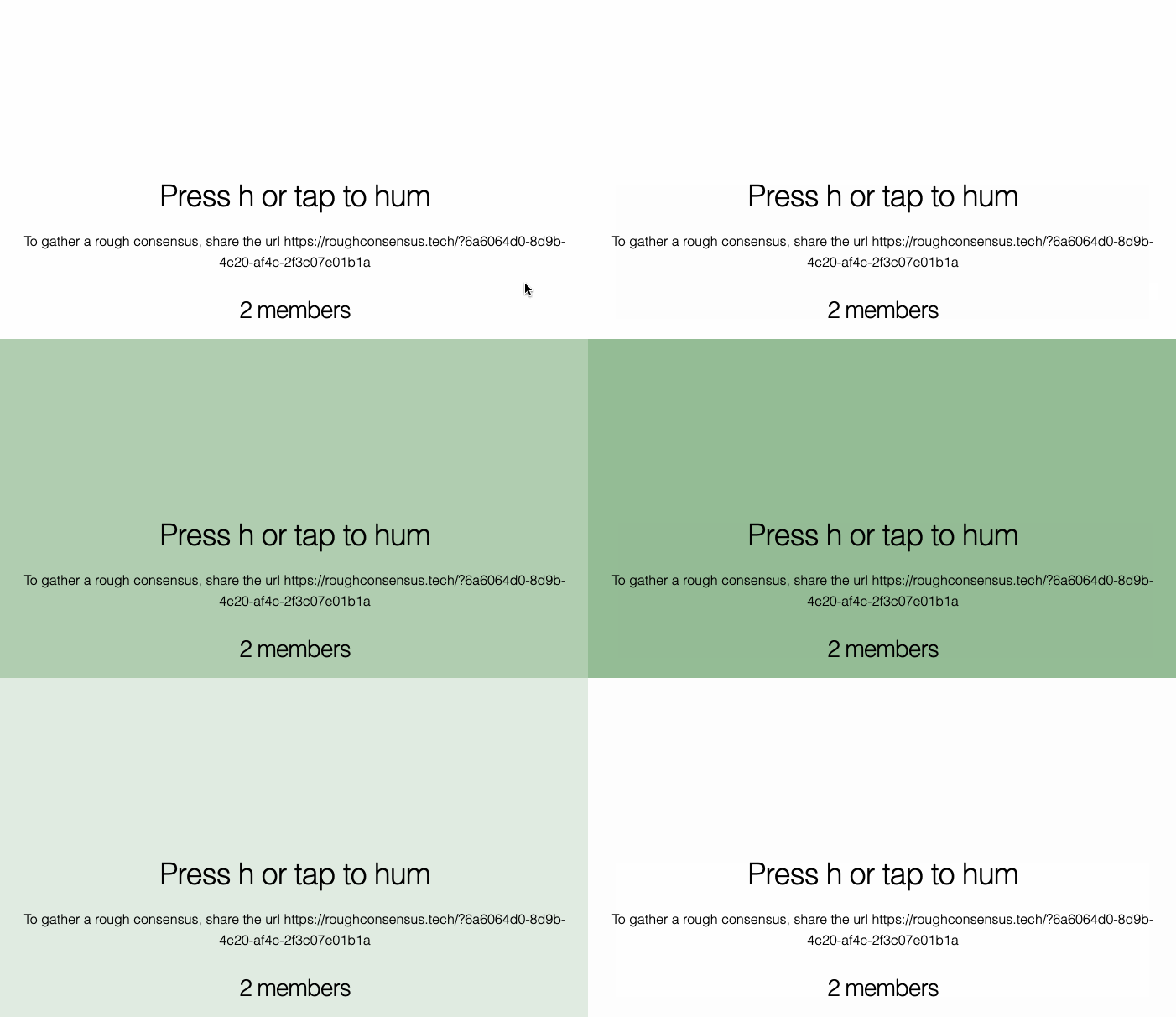
A demo of Rough Consensus
It does just one thing. When you go to https://consensus.tomgamon.com it will generate you a private room with its own UUID, you can share that link with anyone and they will end up in the same room as you. You can then hold h or hold your finger on your screen on mobile to start “humming”. The higher the proportion of people humming in a group, the darker the background color becomes. Thus, the current background color can be used to determine the sentiment of the room. Light green? No one is really feeling it. Dark green? A lot of people are in agreement.
For me, a tool like this can make virtual discussions feel a little less rigid. It’s a simple implementation of a powerful idea — that rough consensus, not unanimity, is what keeps discussions moving.